
How to get around Cartagena
UpdatedTourism Business Operations, Cartagena
The old city is walkable, everything else is not. Distances, taxis, apps, the airport transfer and how long the road to Barú really takes.
Cartagena is a small city with a compact historic core and a long, thin coastline. That geometry decides almost everything about how you move around it: some things are two minutes apart on foot, and others are an hour away by road even though they look close on a map.
The parts of the city, and how far apart they are
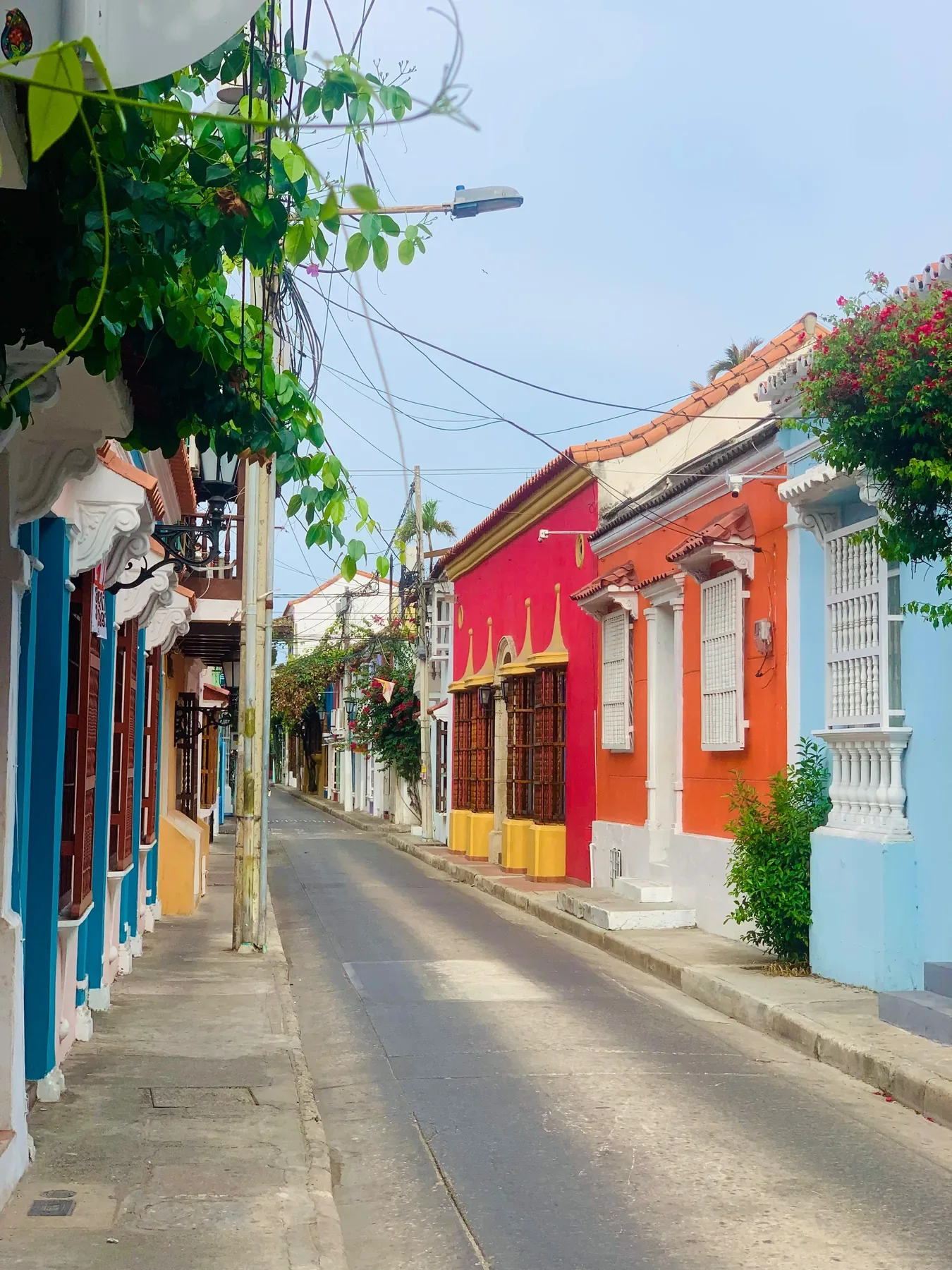
The Walled City (Centro Histórico). The colonial core inside the walls. Small — you can cross it on foot in about twenty minutes. This is the part that is genuinely walkable and genuinely worth walking.
Getsemaní. Immediately outside the walls, five minutes on foot from the Torre del Reloj. Street art, plazas and the city’s nightlife centre of gravity.
Bocagrande. The strip of high-rises on the peninsula, roughly ten to fifteen minutes by car from the old city. Most hotels and the marinas are here or in neighbouring Manga.
Rafael Núñez airport. Inside the city, fifteen to twenty-five minutes from the Walled City depending on traffic. Unusually close for an international airport.
Barú and Playa Blanca. About an hour by road, over the Pasacaballos bridge.
The Rosario Islands. No road. Roughly an hour by boat.
San Basilio de Palenque. Around an hour inland by road.
Walking
Inside the walls and in Getsemaní, walk. The streets are narrow, most are one-way, and a car in the old city spends more time waiting than moving. It is also the only way to see the balconies, doorways and corners that make the place what it is.
Two practical things. The heat is the constraint, not the distance — plan walking for the early morning or after five, and the middle of the day for something with shade or air conditioning. And the streets change name every block or two, which sounds charming and becomes annoying: navigate by plaza, not by street name.
Taxis
Taxis are everywhere and cheap by most visitors’ standards. Two things to know:
They generally do not use meters. The fare is agreed before you get in, by zone. Ask at your hotel what a typical trip should cost — having a reference number is the whole game. Agree the price through the window, then get in.
Carry small bills. Drivers frequently do not have change for large notes, and “no tengo cambio” at the end of a trip is a negotiation you do not want.
Ride-hailing apps operate in the city and remove the haggling, though availability varies by area and time of day.
Getting to Barú
The Pasacaballos bridge replaced the old ferry, so Barú is now a straightforward road trip: roughly an hour, traffic depending. That is genuinely useful, because a beach day on Barú does not depend on sea conditions. When the port authority closes departures, the road is still open.
The other way to reach it is by boat, which is what most people do when combining Barú with the Rosario Islands in a single day.
Getting to the Rosario Islands
There is no road. Everything goes by boat, and boats run on the sea’s schedule, not yours. Two consequences worth planning around:
- Go in the morning. Water is calmest early, every day of the year.
- Do not book an island day for your last day. If it moves, you want somewhere for it to move to.
Arrival day
Because the airport is so close to everything, arrival days in Cartagena work better than in most Caribbean destinations — a midday landing can still be a full afternoon in the old city.
If you are arriving with luggage, in a group, or at night, a pre-arranged transfer removes the one friction point of the trip: negotiating a fare at the kerb while tired. If you are travelling light and comfortable in Spanish, a taxi from the rank is straightforward.
What not to bother with
Renting a car. Parking in the old city is difficult, distances are short, and the cost of taxis for a week is generally lower than a rental plus parking. A car makes sense only if you are staying well outside the city.
Planning a day around the horse-drawn carriages. They are a photo, not transport.
Frequently asked questions
- Is Cartagena walkable?
- The Walled City and Getsemaní are, and walking is the best way to see them — the historic centre is small enough to cross on foot in about twenty minutes. Everything beyond them is not walkable in the heat: Bocagrande, the airport, the marinas and Barú all need a vehicle.
- How far is the airport from the old city?
- Rafael Núñez airport sits inside the city, roughly fifteen to twenty-five minutes from the Walled City depending on traffic. It is one of the closest international airports to a city centre anywhere in the region, which is why arrival days work better here than in most Caribbean destinations.
- Do taxis in Cartagena use meters?
- Generally no. Fares are agreed before you get in, by zone. Ask your hotel what a given trip should cost so you have a reference, and agree the price through the window before opening the door.
- How long does it take to drive to Barú?
- Around an hour from Cartagena, depending on traffic through Pasacaballos. Barú has been road-connected since the bridge replaced the old ferry, so a beach day there does not depend on sea conditions the way an island day does.
- Do I need a car in Cartagena?
- Almost never. Distances are short, parking in the old city is difficult, and taxis or private transfers cover everything a visitor needs. A car makes sense only if you are basing yourself well outside the city.